AI writing tells: the real one isn't the em-dash
Everyone hunts for em-dashes and the word "delve." The durable AI writing tell isn't vocabulary, it's the absence of specificity and stakes, and why that still matters.
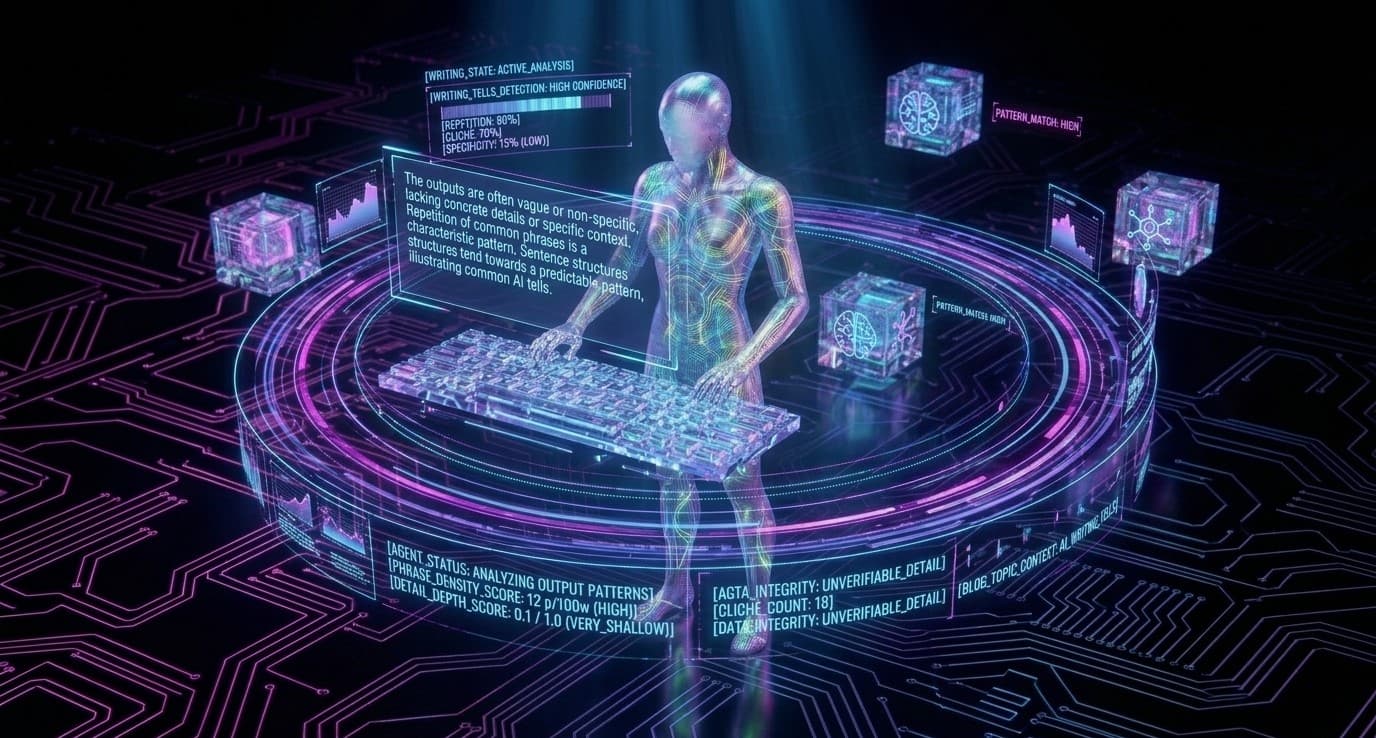
By now everyone has the checklist. Em-dashes everywhere. The word "delve." "It's not just X, it's Y." A tidy little summary paragraph that begins with "In conclusion." We have all learned to spot the surface of machine writing, and for about a year that checklist worked.
It is already failing. Those AI writing tells are the easiest thing in the world to fix, because they are surface, and the models are being tuned to drop them. You can ask for no em-dashes and get no em-dashes. The vocabulary tells are a moving target you will lose, and the tools built to catch them are not reliable either. The best-known study on automated detectors found they misfire badly, flagging non-native English speakers as machines while real generated text slips through. If your test for "a human wrote this" is a word list, you have already lost.
Where the AI writing tells are moving
The tell was never really the em-dash. It was what the em-dash accidentally revealed: nobody was there.
Machine writing is fluent and weightless. It produces the average of everything ever written on a subject, which is why it reads smooth and says nothing that could only come from one person. It has no memory of a specific Tuesday, no opinion that might cost it something, no scar. It cannot tell you the one detail that does not generalize, because it was assembled from everything that does.
So the durable tells are moving from vocabulary to substance, and substance is much harder to fake:
- Specificity that could only come from being there. Not "performance improved significantly" but the actual number, the actual thing that broke, the constraint nobody outside the room would know to invent.
- Stakes. A real opinion risks disagreement. Machine prose hedges by default because it is optimized to be acceptable to everyone, and a take that offends no one usually means no one is behind it.
- Cost. Human writing remembers something that hurt to learn. It has a before and after. The average has neither.
None of those are style. You cannot prompt your way to having been somewhere.
Why it still matters
You could ask: if the machine writing is fluent and often correct, who cares who wrote it? Here is who. The moment writing costs nothing to produce, the only writing worth trusting is the writing that has a person behind it, because a person can be held to it. Fluency is now free. What stays scarce is judgment with a name attached, and trust attaches to the human, not to the prose.
This is also the most useful writing advice left. If you want to sound human, stop trying to sound correct. Say the specific thing only you could say. Take the position you would defend out loud. Put the number in. The machine can match your grammar all day. It cannot have been you.
The tell was never the em-dash. It was the absence of a scar.